
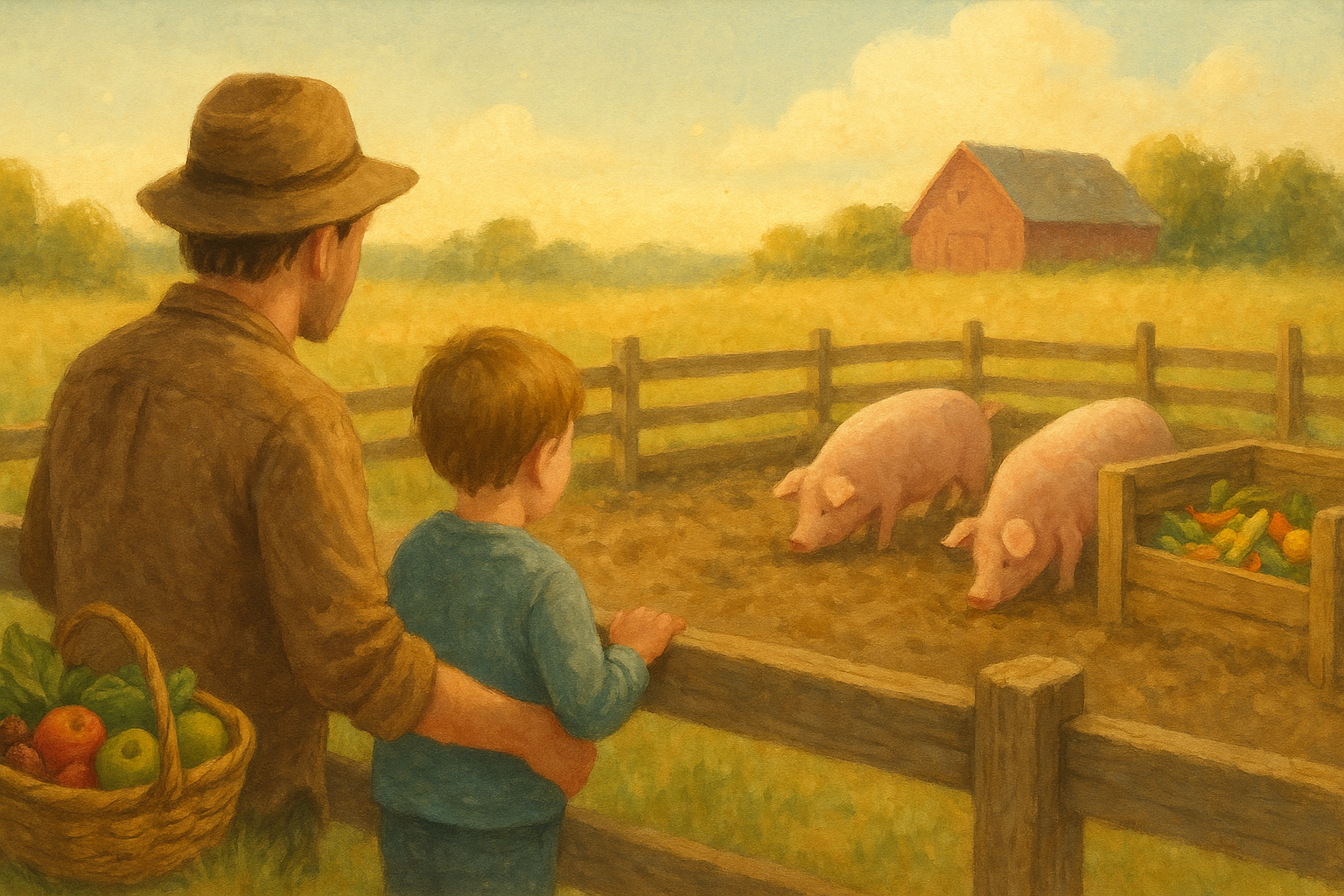
Let’s get one thing straight: anyone who’s actually raised animals knows pigs are scavengers—opportunistic eaters that historically cleaned up refuse. If “you are what you eat” applies to animals, then pork has always sat in a different category from creatures that graze or hunt cleanly. That’s not moral panic; it’s a reality farmers understood long before supermarkets made meat look anonymous.
1) The Quran gives the logic before the rule
Surah Al-Mā’idah (5:4)
Arabic (excerpt): يَسْأَلُونَكَ مَاذَا أُحِلَّ لَهُمْ قُلْ أُحِلَّ لَكُمُ الطَّيِّبَاتُ
English (excerpt): “They ask you what is lawful for them. Say: Lawful for you are all good and pure things.”
The baseline is simple: the good and pure (ṭayyibāt) are allowed. Only what is corrupting or impure gets pulled out of the basket.
Then the text names pork plainly:
Surah Al-Mā’idah (5:3)
Arabic (excerpt): حُرِّمَتْ عَلَيْكُمُ الْمَيْتَةُ وَالدَّمُ وَلَحْمُ الْخِنزِيرِ…
English (excerpt): “Forbidden to you are carrion, blood, the flesh of swine…”
(You’ll see the same ban echoed in 2:173 and 16:115.)
So when parents say “We don’t eat it because Allah said so,” they’re only giving half the sentence. It’s not just command; it’s category. The Quran’s pattern is: the pure is permitted; the corrupting is barred. If we teach kids the why, not just the what, they actually learn to think like Muslims—understanding, not button-pressing obedience.
2) “But my friends say bacon is delicious”
Packaging is designed to make you forget the source. Take a kid to a working farm and stand downwind of the pig pens; let them watch how pigs feed and what they’ll happily eat. The point isn’t to gross them out for sport—it’s to reconnect cause and effect. Food has a backstory, and backstories matter. “Delicious” doesn’t equal good. Plenty of things are engineered to taste amazing while ignoring what they are and what they do to us.
3) “Can I eat pork and still be Muslim?”
There are Muslims who do all kinds of things Islam doesn’t permit. Faith isn’t a switch you lose from one sin. God gave us agency—and with it, accountability. If someone chooses pork, that’s their choice; but it’s not neutral just because it’s common. From the Quran’s view, it belongs to the non-ṭayyib category. You don’t have to pretend you agree to be compassionate; you also don’t have to pretend the rule is arbitrary to be modern.
And yes—arriving at conviction sometimes takes a wrong turn and a return. That journey beats blind compliance every time, because what you understand, you can stand on.
Bottom line
Islam’s guidance about food isn’t here to bully your plate; it’s here to protect your person—body, mind, and moral compass. Pork isn’t off the table because Muslims are anti-joy and bacon is fun; it’s off the table because the Quran sorts foods by what they are and what they do, and swine lands on the wrong side of that filter. Teach the logic and the love behind the limits, and you’re raising thinkers, not just rule-followers.
Keep exploring Islam through understanding, not just rule-collecting
You can explore our catalog of fully illustrated storybooks here:
👉 Muslim Kids Storybook Catalog
Or you can access our free digital library and find your next favourite bedtime story here:
👉 Read islamic stories for free
Why is pork forbidden in Islam?
Because the Qur’an explicitly prohibits it; Muslims choose permitted meats instead, as part of a clean and mindful diet.
Is this about judging others?
No. It’s a personal religious practice; Muslims are taught to make respectful choices without shaming others.
What do Muslims eat instead of pork?
Beef, lamb, chicken, fish—when sourced and prepared in a halal way.
What about products made from pork (e.g., gelatin)?
Many Muslims avoid pork-derived ingredients; fish- or plant-based alternatives exist.