
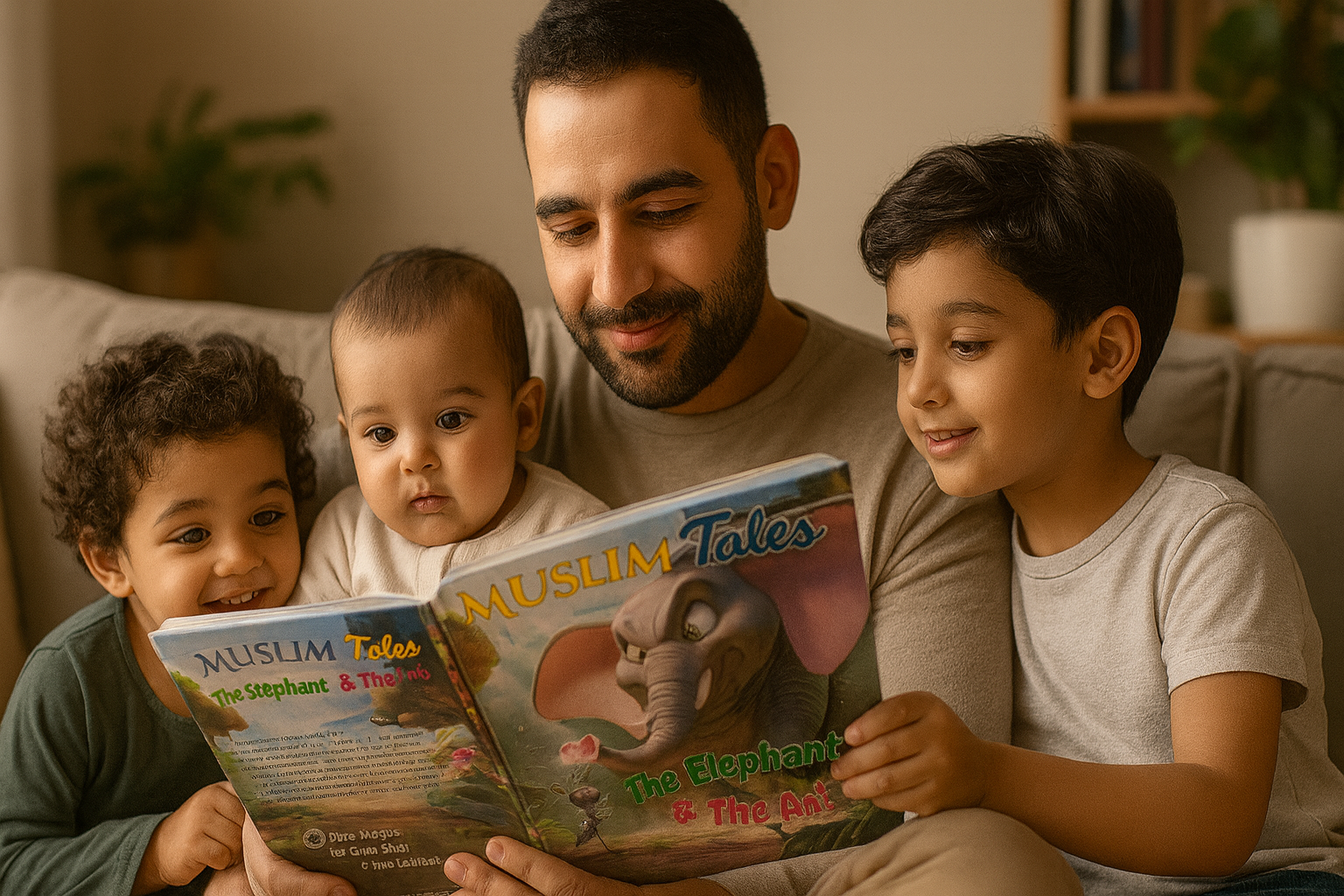
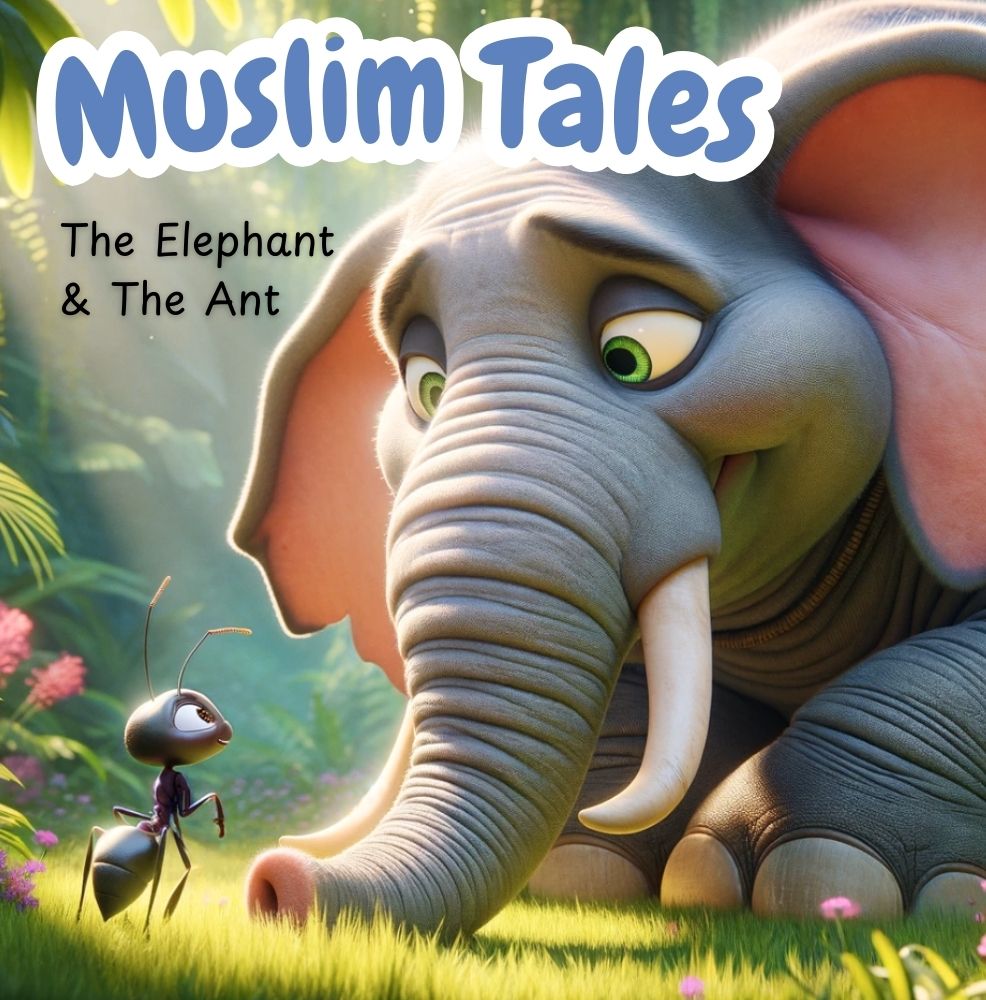
Classic stories for Muslim kids work best when the lesson is simple and felt. In this warm jungle fable for ages 3–7, a tiny ant shows a proud elephant—and young readers—that every creature has worth, and that real strength is choosing kindness when it’s hard.
Classic Stories for Muslim Kids
Most of us know the tale: a proud elephant splashes a tiny ant because he’s the biggest and strongest. Later, he steps on a patch of thorns and can’t walk. Only the small ant can remove the tiny thorns, one by one. She chooses Allah’s guidance—repel harm with good—and helps him anyway.
This is why classic stories for Muslim kids endure: the lesson lands where children feel it. Size doesn’t decide value. Character does. As the elephant softens and becomes the ant’s closest friend, kids see how kindness repairs what pride breaks—and why “small” helpers matter.
What Does Islam Say About Bullies
When someone is mean to us, it’s tempting to strike back. But with siblings, cousins, classmates, or neighbours, “fire with fire” rarely changes hearts. Islam teaches a higher path:
Arabic: وَلَا تَسْتَوِي الْحَسَنَةُ وَلَا السَّيِّئَةُ ۚ ادْفَعْ بِالَّتِي هِيَ أَحْسَنُ فَإِذَا الَّذِي بَيْنَكَ وَبَيْنَهُ عَدَاوَةٌ كَأَنَّهُ وَلِيٌّ حَمِيمٌ
English (Qur’an 41:34): “Good and evil are not equal. Repel [evil] with what is best; then the one between you and him may become as a devoted friend.”
Read the verse on Qur’an.com: https://quran.com/41/34
In the story, the ant models this ayah: she helps instead of humiliating. The result isn’t just a solved problem—the bully changes. (Kindness never means accepting danger: set boundaries, tell a trusted adult, and stay safe.)
Sibling Rivalry in Islam
All families have squabbles. The question is: how do we model proper adab? Kids learn fastest through stories. This tale offers a rhythm families can reuse at home:
- Notice the feeling (hurt, anger, “that’s not fair”).
- Pause and remember the verse: repel with what is best.
- Choose a better deed (share, help, invite a turn, kind words).
- Repair (“I’m sorry,” “Let’s try again,” “Your turn next”).
Over time, children see that status and size don’t earn respect—good character does. Rivalry becomes teamwork when each child looks for a small good they can offer.
Parent Takeaways
- A kindness-over-pride model kids can copy in real life.
- A Qur’anic script for common conflicts (41:34) that actually shifts hearts.
- A memorable reminder that every child has worth, regardless of size or age.
- Practical language for sibling peace: notice → pause → choose good → repair.
Q: Why be good to those who aren’t?
A: Surat Fussilat (41-34):"ادْفَعْ بِالَّتِي هِيَ أَحْسَنُ"
Q: Why should we treat everyone kindly, no matter their size or strength?
A: The elephant learned that being big or strong doesn't make us better. Everyone, no matter how small, deserves respect and kindness. True strength is for helping, not hurting.
📖 Want to preview this story?
Explore A Taste of Mayous — our free collection of Muslim storybook previews. See how we blend Islamic values, science, and heartwarming lessons kids love.
What makes this a classic story for Muslim kids?
It’s a simple, memorable fable where a small hero changes a big heart—anchored to Qur’an 41:34. Children see humility, kindness, and real strength in action, not just words.
How to teach humility to Muslim kids with this book?
Use the elephant’s mistake as a mirror: pause after the splash scene and ask, “Have we ever acted big when we should have acted kind?” Then model adab: acknowledge harm, repair with good, and try again—just like the ant.
How to teach kindness to Muslim kids (even when others are mean)?
Practice a short script: “Pause → choose better → offer a small help.” Pair it with the ayah (Qur’an 41:34) and a tiny action—sharing a turn, gentle words, or asking “How can I help?”
Is this an Islamic story about bullying for kids?
Yes. It shows what to do when someone acts unfairly: stay safe, set boundaries, and—when possible—repel with what is best so hearts can change.
Does kindness mean tolerating bullying?
No. Islam commands justice and safety. Tell a trusted adult, set firm boundaries, and avoid danger. The better response means choosing a wise good deed when it’s safe and likely to help.
What Qur’an verse teaches ‘repel evil with good’ for children?
Qur’an 41:34. Read it here: https://quran.com/41/34. The story translates the verse into a child-level action plan.
How can I use the story to reduce sibling rivalry in Islam?
Rehearse the rhythm: notice → pause → choose good → repair. After the story, role-play common conflicts (toys, turns, seats) and let kids practice offering a small good first.
What age range is this Islamic picture book for?
Ideal for ages 3–7. Short scenes, clear cause-and-effect, and repeatable language make it a great read-aloud for preschoolers and early readers.
How does the book show that everyone has worth?
Only the tiny ant can solve the elephant’s big problem. Kids learn that ability and value aren’t tied to size or strength—every child has worth and a unique way to help.
Can teachers use this in circle time or Islamic studies?
Yes. Read the story, discuss 41:34, and give one concrete practice (share a turn, carry a friend’s bag, use kind words). Track “kindness points” for the week.
How do I connect this to social-emotional learning (SEL)?
Name feelings → choose a coping verse (41:34) → select a helpful action → reflect on the outcome. This aligns with SEL goals: self-regulation, empathy, and problem-solving.