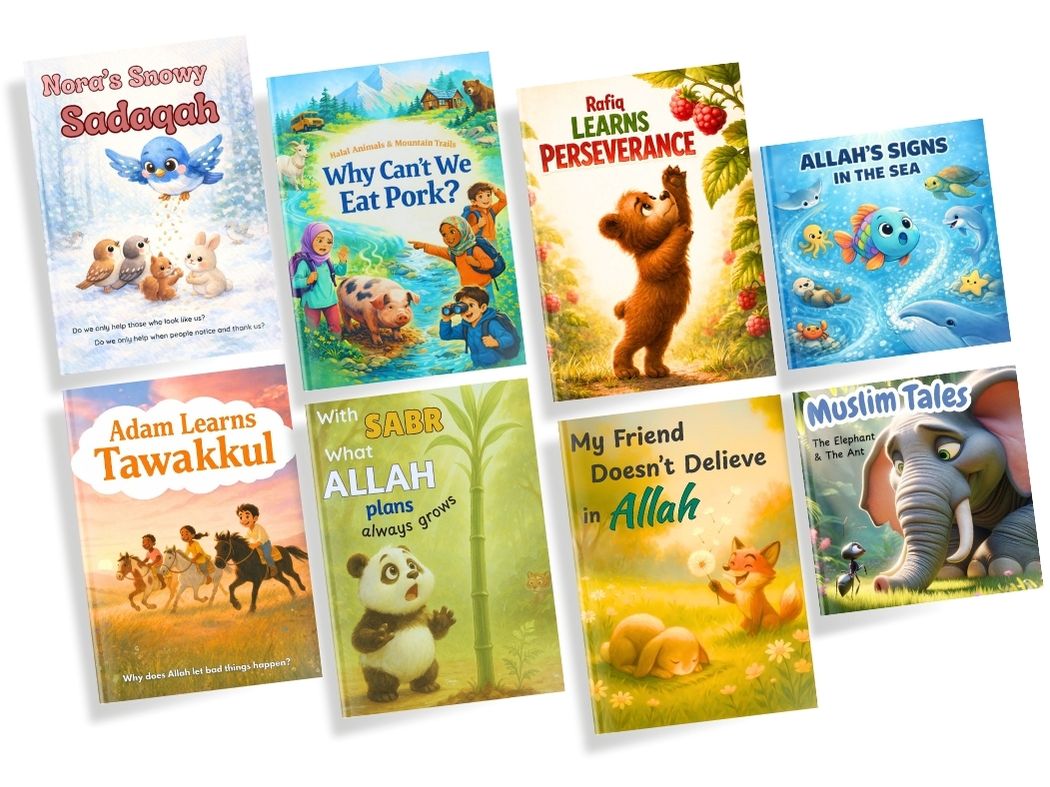
This bundle gives you 8 beautifully illustrated tales that open the door to the conversations you actually want to have—about Allah, character, and the world around us—at a level kids understand and remember.
Q:Why Do we Need to Give Sadaqah? A:"Surat Al-Baqarah (2:274) “Those who spend their wealth in the way of Allah, both by day and by night, in secret and in public, will receive their reward from their Lord. They will have no fear, nor will they grieve.” ٱلَّذِينَ يُنفِقُونَ أَمْوَٰلَهُم بِٱلَّيْلِ وَٱلنَّهَارِ سِرًّۭا وَعَلَانِيَةًۭ فَلَهُمْ أَجْرُهُمْ عِندَ رَبِّهِمْ وَلَا خَوْفٌ عَلَيْهِمْ وَلَا هُمْ يَحْزَنُونَ "
🧡 Moral Values
Q:What does being kind and generous mean? A:Being kind and generous means helping others without expecting anything in return.
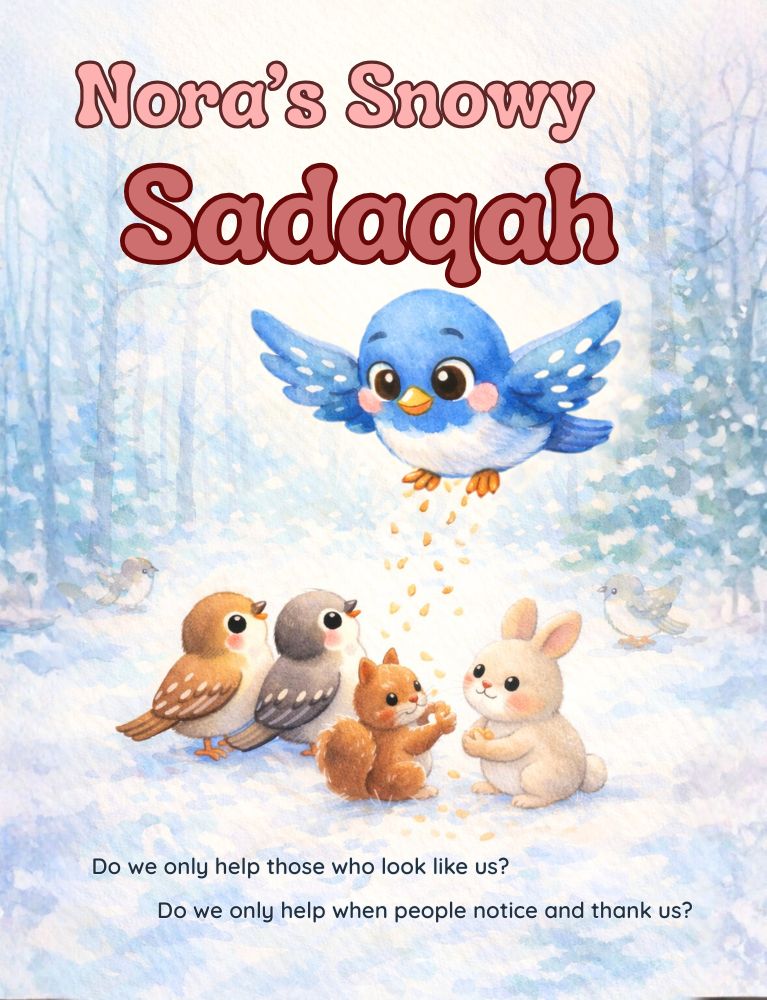
Q:Do we only help those who look like us? A:Nora shows us that helping others isn’t limited to those who look like us. She helped other sparrows, but also smaller birds, squirrels, and rabbits. Her actions remind us that generosity should extend to everyone, no matter their appearance.
Q:How do animals survive during winter? A:Animals survive winter by storing food, building shelters, and using natural behaviors like hibernation. Nora helped by collecting seeds and building shelters, showing us how important preparation is.
Description
This story helps children understand Sadaqah through a real-life example. Nora, a kind sparrow, shares her seeds and helps build a shelter for the animals when a storm suddenly hits the forest.
Q:Why does Allah allows bad things to happen? A:Introducing Surat Al-Hadid (57:22-23), Adam learns to trust that Allah knows what he does not. "No disaster strikes upon the earth or among yourselves except that it is in a register before We bring it into being – indeed that, for Allah, is easy. In order that you not despair over what has eluded you and not exult [in pride] over what He has given you. And Allah does not like everyone self-deluded and boastful."
🧡 Moral Values
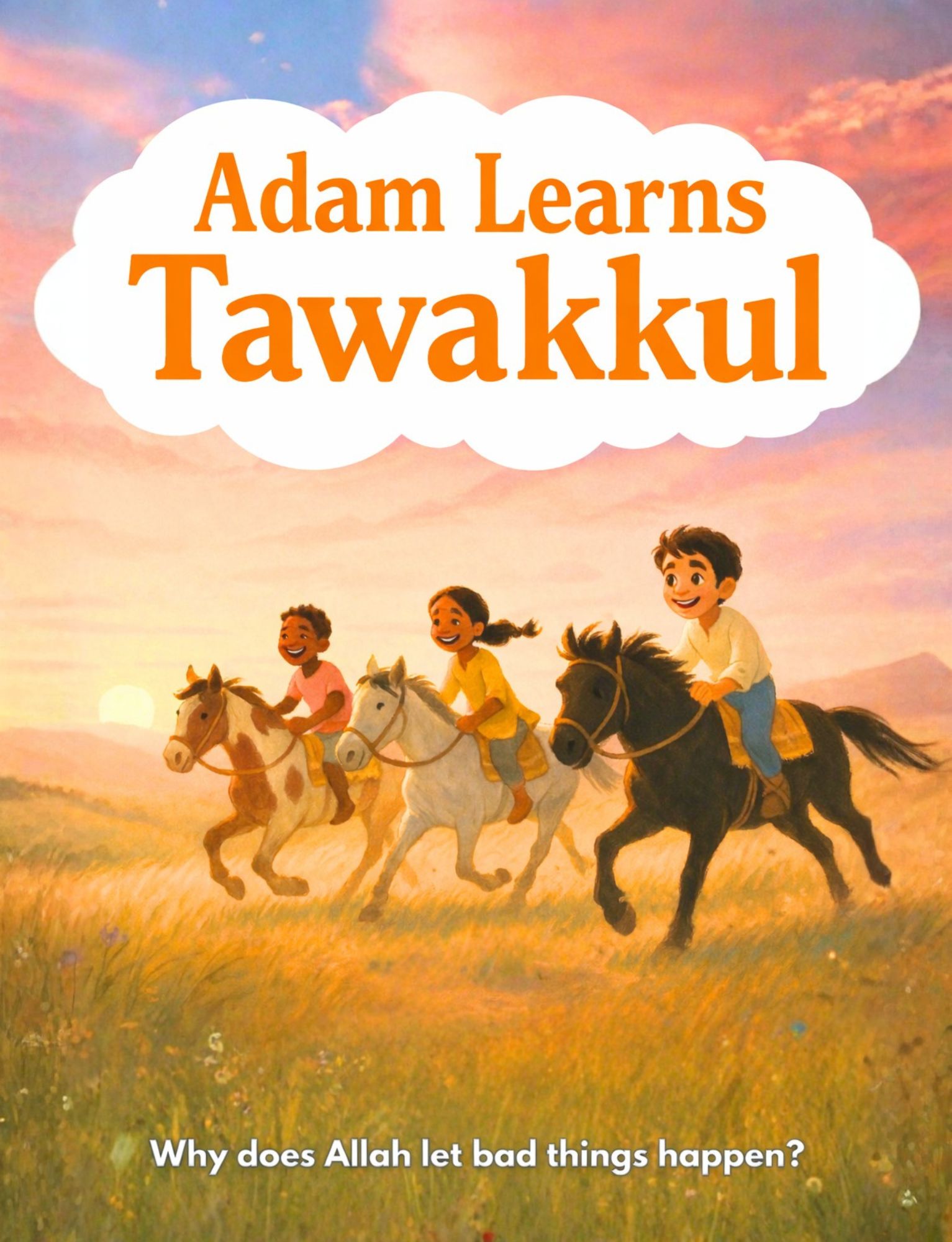
Q:Does trusting Allah means we remain passive and do nothing? A:Adam learns to trust that Allah knows what he does not, and accepts that his horse ran away. His friends and family help him, and they do farm chores without his horse's help.
🧠 Knowledge & Science
Q:What are the different parts of the apple called? A:Learn the different names of the apple when apple picking with Adam! (stem, peel, flesh, seeds, core)
Q:What did we do if a horse wasn't available to plow fields back in the day? A:Many other animals can plow fields, like a cow.
Q:What tools can be built when we can't do work ourselves? A:A brief introduction on the engineering and inventions world, Adam build a simple telescopic fruit picker during apple picking when he's unable to climb a ladder.
In “Adam Learns About Tawakkul: When the Horse Left… and Came Back!”, Adam’s horse runs away, leaving him and his friends stuck doing chores without any help. But he learns he can use a cow to plow fields instead, and creates an invention to pick apples off a tree.
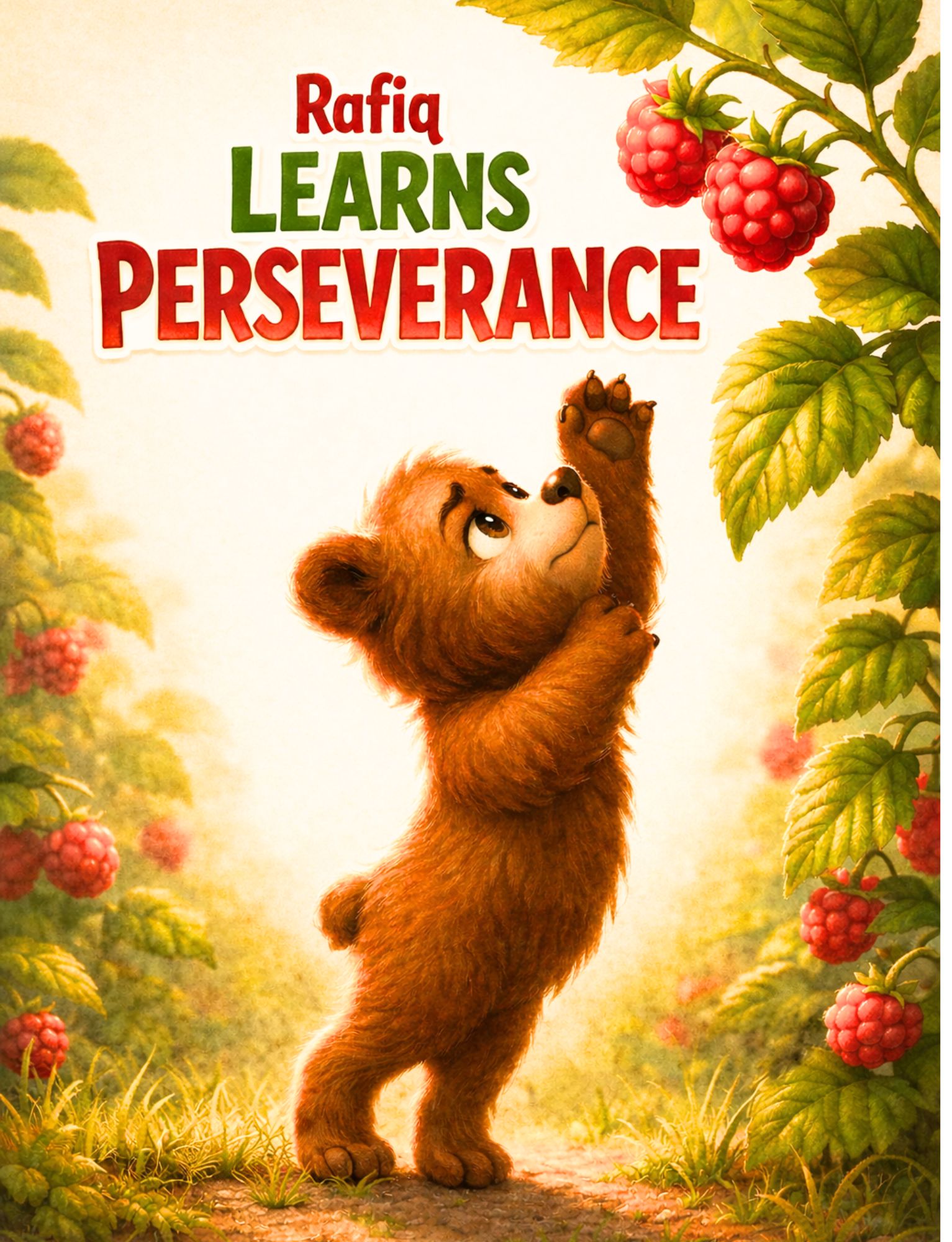
Q:What does “With hardship comes ease” mean? A:Surah Al-Sharh (94:5-6) "For indeed, with hardship comes ease. Indeed, with hardship comes ease."فَإِنَّ مَعَ ٱلْعُسْرِ يُسْرًا إِنَّ مَعَ ٱلْعُسْرِ يُسْرًاRafiq’s journey shows that struggle is followed by relief. The climb was painful at first, but each time he tried again, it became easier. By the end, he was strong enough to climb effortlessly and enjoy the reward. This reflects Allah’s promise in the Quran that no hardship lasts forever—ease always follows.
🧡 Moral Values
Q:What happens when we do things we must do instead of just what we want to do? (Self-Discipline) A:Rafiq wanted the best berries, but they were hard to reach. Instead of giving up, he pushed through the discomfort and kept climbing. His self-discipline made him stronger—and in the end, he was rewarded with more than he hoped for.
🧠 Knowledge & Science
Q:How do raspberry plants grow? A:They start as seeds, grow roots and canes, bloom flowers, and then turn into berries once pollinated—nature’s slow reward.
Q:Why do our muscles hurt when we climb, like Rafiq did? A:Because the body builds strength by repairing muscles after they’ve been used—pain is part of getting stronger!
Q:How do our muscles get stronger when we use them? (Muscle Growth & Strength Building) A:When Rafiq climbed, his sore muscles were getting stronger. Exercise makes tiny tears in muscle fibers, and rest helps rebuild them—even stronger than before.
Rafiq is a curious and determined young bear who loves raspberries—but the best ones always seem out of reach! When faced with challenges, he doesn’t give up. Instead, he pushes through difficulties, discovering that patience, perseverance, and hard work lead to the sweetest rewards. Follow Rafiq’s journey as he learns an important life lesson inspired by the Quran: “With hardship comes ease.”
Q:What does the Qur’an say about waiting? A:Surah Al-Baqarah (2:153) يَـٰٓأَيُّهَا ٱلَّذِينَ ءَامَنُوا۟ ٱسْتَعِينُوا۟ بِٱلصَّبْرِ وَٱلصَّلَوٰةِ ۚ إِنَّ ٱللَّهَ مَعَ ٱلصَّـٰبِرِينَسورة البقرة – الآية ١٥٣O believers! Seek comfort in patience and prayer. Allah is truly with those who are patient.
🧡 Moral Values
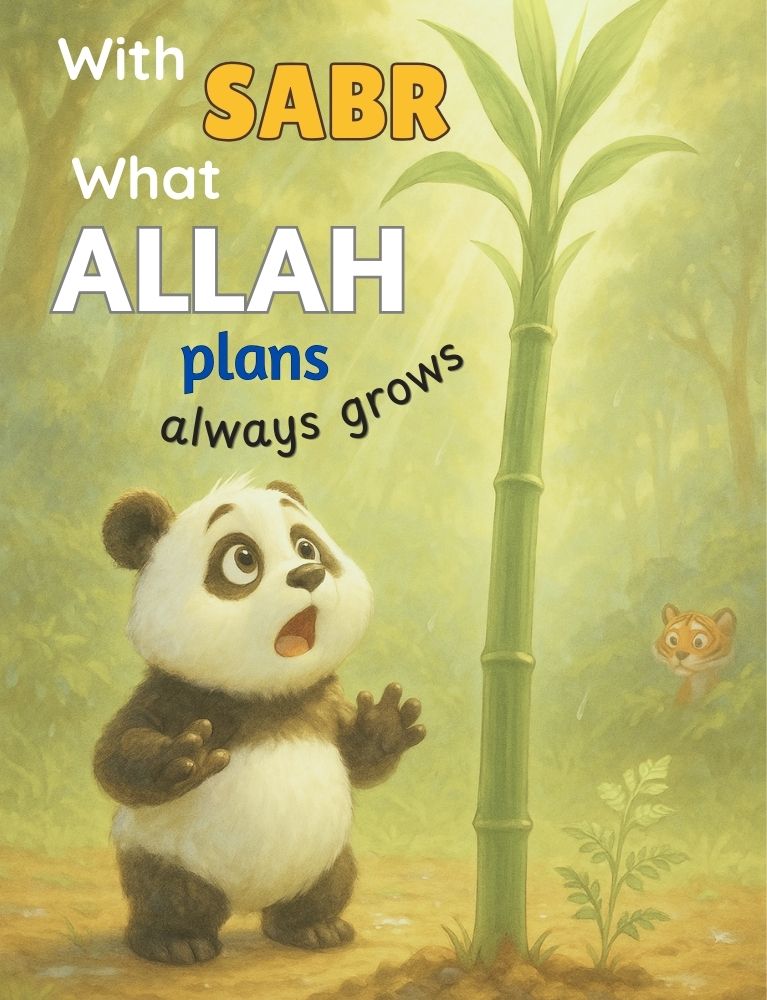
Q:Why did Tigo laugh at Pao? A:Because he thought only fast things were worth planting. But not everything grows fast—and not everything needs to.
Q:Was Pao wrong for waiting so long? A:No. Pao trusted what he couldn’t see. He stayed kind, patient, and hopeful—even when it was hard.
Q:What did Bao show Pao in the hidden clearing? A:He showed him a forest of sky-high bamboos— to remind him what was possible if he just kept going.
Q:So… what’s the big lesson? A:Great things often grow slowly. We just have to be patient.
Q:Why didn’t the bamboo grow right away? A:Because it was growing roots underground—getting ready before anyone could see.
Q:What do roots do, anyway? A:They bring water and food to the plant and help it stand tall. Without strong roots, even the tallest bamboo would fall.
Q:How long have ferns been around? A:Ferns are some of the oldest plants on Earth! They’ve been growing since the time of dinosaurs.
Q:How fast can bamboo grow once it starts? A:Some types of bamboo can grow up to 3 feet in one day! That’s faster than almost any other plant on Earth.
Rooted in the classic tale of the bamboo that takes years to break through the soil before growing sky-high overnight, this story gently teaches children that Allah’s plans take time — and they’re always worth the wait. Blending beautiful illustrations, emotional storytelling, and real science facts about nature, roots, and growth, this book is perfect for Muslim families seeking stories that spark faith, character, and curiosity.
Q:What Helps a Believer Stay Strong When Hard Things Happen? A:Surah An-Nisa (4:104): “…They suffer as you suffer, but you hope from Allah what they do not hope.”
🧡 Moral Values
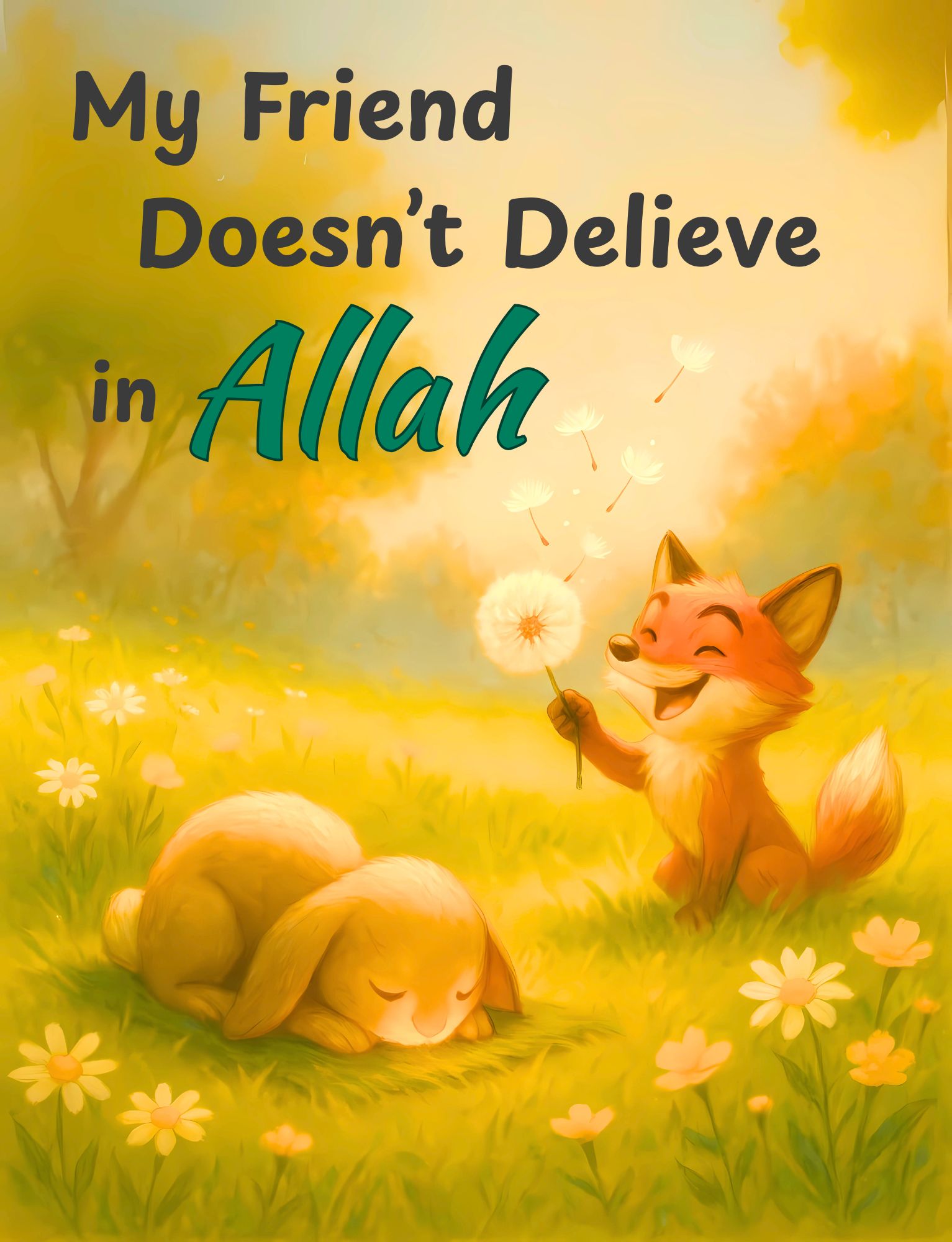
Q:My friend doesn’t believe in Allah—how is he different from me? A:You can rely on Allah and share your fears with Him, which brings calm. Without that support, people often feel more anxious.
🧠 Knowledge & Science
Q:How can it rain even when it’s very hot? A:Heat makes water evaporate and rise, then cooler air turns it into droplets that fall as rain.
Q:What is the life cycle of a dandelion? A:A dandelion grows from a seed, blooms yellow, then becomes a white puffball whose seeds blow away in the wind.
Two best friends are caught in a sudden storm and can’t make it back to their burrow. One panics and tries to rely only on himself. The other turns to Allah with a quiet duaa—and finds calm and strength, even before anything changes outside.
Q:Where is Allah? A:Surat Al Hadid 57:4 "And He is with you wherever you are"
🧡 Moral Values
Q:Is Allah up in the sky? A:God is not up or down, he is all around us at all times.
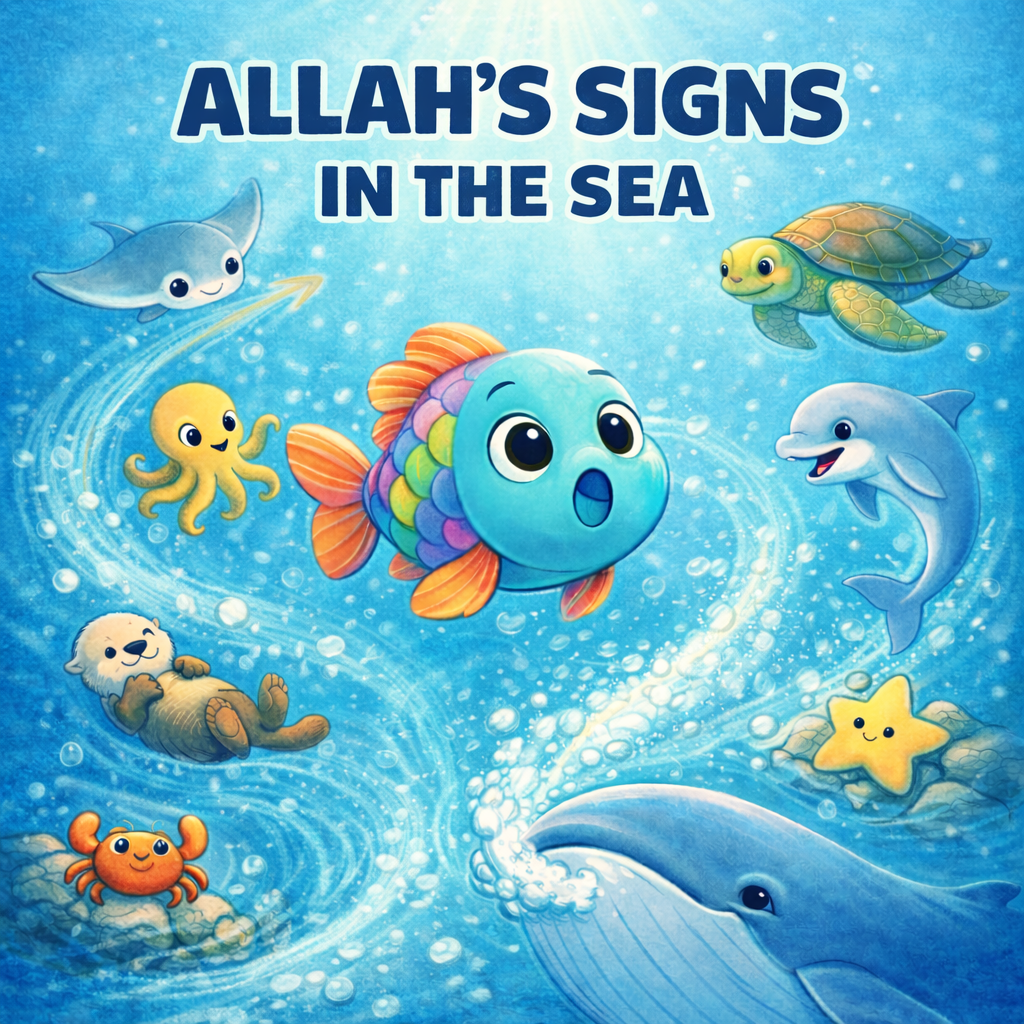
Q:What does it mean that Allah is on his throne? A:Children have a hard time with analogies, telling them that God is on his throne makes them depict a man sitting. Rather, we give them an analogy that just like the fish is surrounded by the ocean, we too are always surrounded by God without knowing it.
Babies and toddlers love discovering the name of animals and repeating sounds. So how about we read them a story to discover 8 new animals of the sea. All while learning that Allah is all around us, like the ocean is all around the little fish.
Q:Why be good to those who aren’t? A:Surat Fussilat (41-34):"ادْفَعْ بِالَّتِي هِيَ أَحْسَنُ"
🧡 Moral Values
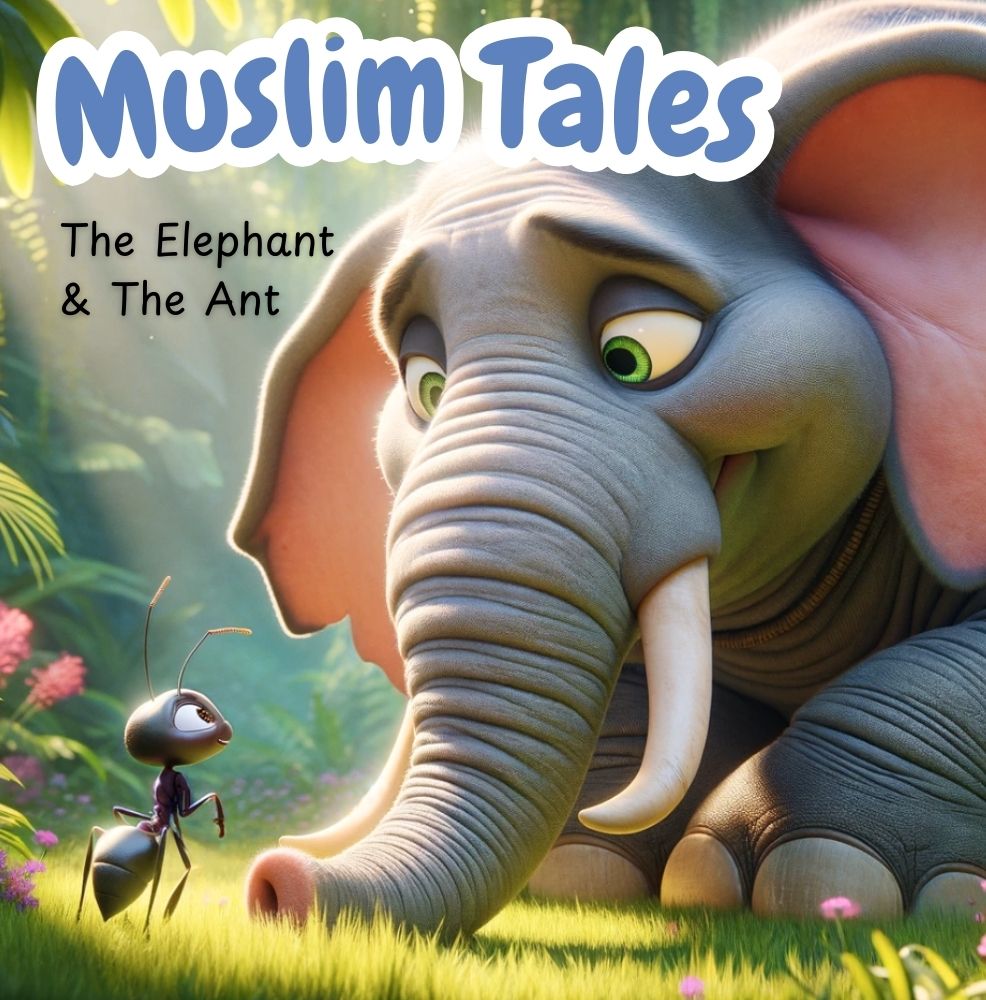
Q:Why should we treat everyone kindly, no matter their size or strength? A:The elephant learned that being big or strong doesn't make us better. Everyone, no matter how small, deserves respect and kindness. True strength is for helping, not hurting.
Q:How should we respond when someone is mean to us? A:Allah teaches us to respond to bad actions with good deeds. When the elephant was hurtful, the ant chose forgiveness and kindness, teaching the elephant an important lesson.
Q:Why is arrogance harmful to us and others? A:Arrogance makes us think we’re better and causes us to hurt others. The elephant’s arrogance caused pain, but humility and kindness created friendship.
Inspired by popular fables, the story of the elephant and the ant recounts the life of an elephant who made fun of the other animals and bullied them because he underestimated them, thinking that no one could harm him thanks to his gigantic size. However, he was proven wrong by a tiny little ant.
Q:Why can’t we eat everything? A:Surat Al Maidah 5:5 ‘All good, pure foods have been made lawful for you’ "الْيَوْمَ أُحِلَّ لَكُمُ الطَّيِّبَاتُ"
Q:Which animals are Halal? A:Surat Al Maidah 5:1 ‘All grazing livestock has been made lawful to you’ "أُحِلَّتْ لَكُم بَهِيمَةُ الأَنْعَامِ"
Q:Which animals are Haram? A:Surat Al Maidah 5:3‘Forbidden to you are carrion, blood, and swine […] —except what you slaughter ˹properly˺ ' "حُرِّمَتْ عَلَيْكُمُ الْمَيْتَةُ وَالدَّمُ وَلَحْمُ الْخِنزِيرِ"
Q:What are the exceptions? A:Surat Al Maidah 5:3 ‘But whoever is compelled by extreme hunger—not intending to sin—then surely Allah is All-Forgiving, Most Merciful.’ "فَمَنِ اضْطُرَّ فِي مَخْمَصَةٍ غَيْرَ مُتَجَانِفٍ لِإِثْمٍ فَإِنَّ اللَّهَ غَفُورٌ رَحِيمٌ"
Q:What about Seafood? A:Surat Al Maidah 5:96‘It is lawful for you to hunt and eat seafood’ "أُحِلَّ لَكُم صَيْدُ الْبَحْرِ وَطَعَامُهُ"
Q:Why do we say 'Bismillah' before eating? A:Saying 'Bismillah' reminds us to thank Allah for the food we have and to eat in a way that’s mindful and blessed.
Q:Why do we need to know how an animal died before eating it? A:Because halal isn’t just about the animal—it’s also about how it’s treated and how it dies, with kindness and care.
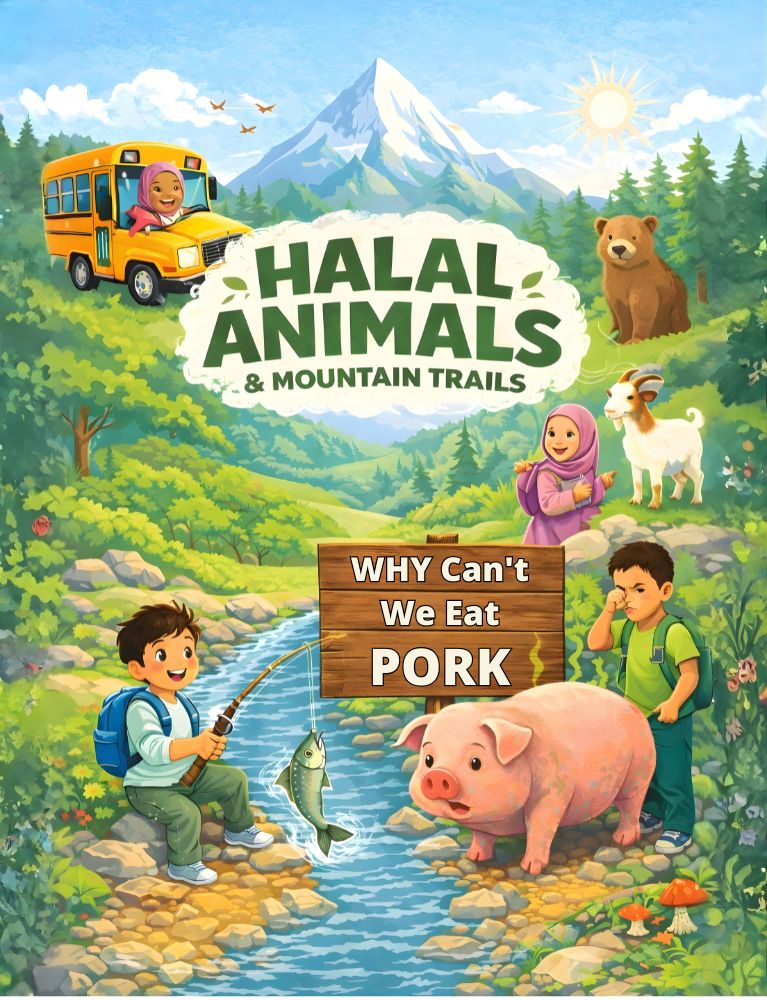
Q:What can we learn by observing nature with care? (Reflection & learning from creation) A:As Amir and Layla watched animals in the wild, they understood which were halal and which were not. Nature helped them connect what they knew to what they saw.
Q:What do we do when we’re unsure if something is right or wrong? (Curiosity & asking questions) A:Amir didn’t just follow others—he asked why Muslims don’t eat certain animals. By asking questions, he learned and made better choices.
Q:Why are pigs considered dirty animals? A:Because they eat decaying matter, garbage, and dead animals, which helps clean the environment (decomposer)—but makes them unsafe to eat.
Q:Why does Islam have a special way of slaughtering animals? (Zabiha & animal ethics) A:Zabiha is a way to treat animals with care and make sure the meat is safe. It helps the animal feel less pain, keeps the meat clean, and shows respect to life—just as Allah teaches and science agrees.
Q:Why do bears eat so many berries before winter? A:Bears can eat thousands of berries a day! They use their strong sense of smell to find berries and build up fat. This fat helps them stay warm and healthy during their winter sleep (hibernation).
Join Adam, Amir, Layla and Aminata on a hiking adventure in the mountains! Along the way, verses of the Quran are introduced in a fun and engaging manner to help them learn which animals are halal or haram.