
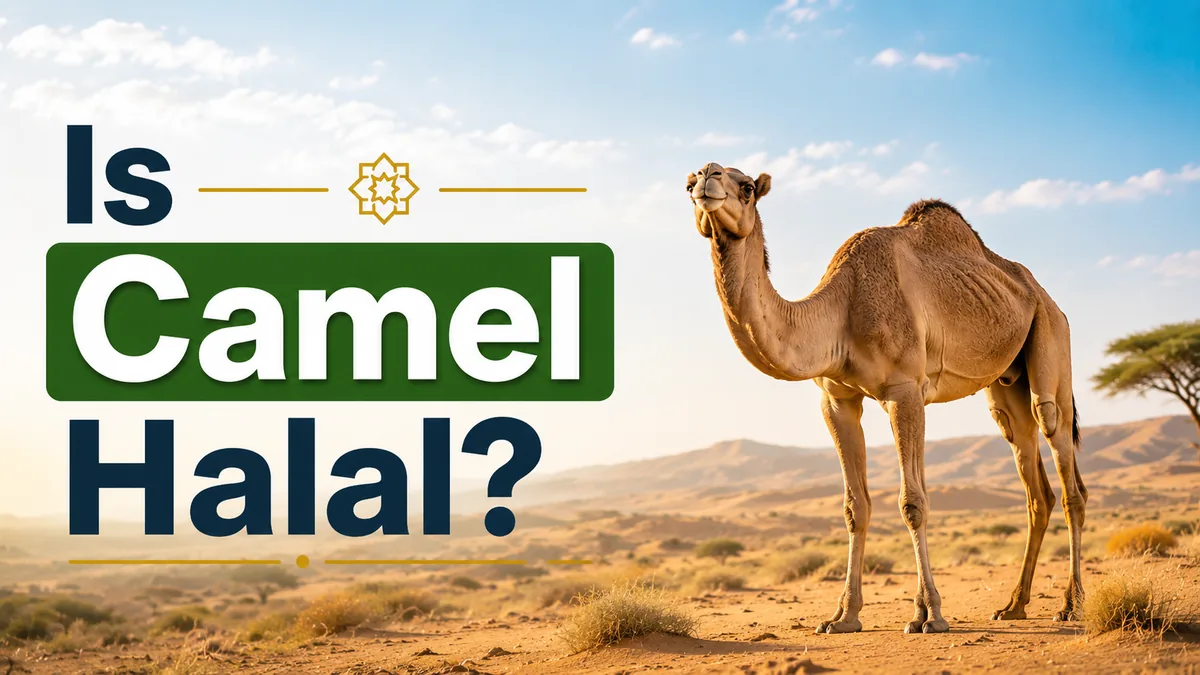
Is Camel Halal?
Yes, camel is halal. Camels are large herbivorous animals native to arid regions that are explicitly mentioned in Islamic law as permissible. They are non-predatory animals classified as halal. Camel meat is widely eaten across Muslim-majority countries, particularly in the Middle East, North Africa, and parts of Asia.
Understanding Camels
Camels are large herbivorous animals that feed on desert grasses, shrubs, and vegetation. They are non-predatory and have been domesticated for thousands of years. Camel meat is a traditional food source and is explicitly permitted in Islamic jurisprudence. Camels are valued in Islamic cultures for both food and transportation.
If the Camel Is Hunted
If someone hunted a wild camel, the meat is halal only if three conditions are met:
- Bismillah was said before the hunt. The hunter must invoke “Bismillah” before releasing the hunting weapon.
- The wound was fatal. The shot must cause the camel to die from the hunting wound itself.
- The camel died quickly. Swift death from the hunting weapon is ideal.
Allah states: “And He has created cattle for you; from them you derive warmth and other benefits, and from them you eat” (Qur’an 16:5)
Sahih al-Bukhari 5484 confirms hunting guidance. Sahih Muslim 1970 further establishes that hunted meat is lawful. Qur’an 5:4 explicitly permits eating hunted game when Bismillah is invoked.
If the Camel Is Slaughtered
Domesticated camels must be slaughtered using the Islamic Zabiha method: a sharp knife, swift cut to throat, Bismillah said before cutting, and complete bleeding allowed. Camel slaughtering is practiced throughout the Muslim world and is performed by trained personnel at halal facilities.
If the Camel Is Found Dead
If you find a camel that is already dead, the meat is not halal. “Forbidden to you are dead animals…” (Qur’an 5:3)
If the Source Is Unknown
Camel meat from unknown sources should be verified for proper halal slaughter. For Muslim families: purchase from trusted halal suppliers, particularly those in Middle Eastern or North African communities where camel is traditional.
Related Halal Animals
Related halal animals: Kangaroo, Horse, Deer. All are herbivorous animals with identical halal hunting and slaughter requirements.
Simple Answer
- Is camel halal? Yes. Camels are herbivorous, explicitly permitted in Islamic law.
- Is the meat halal? Only if hunted with Bismillah or slaughtered using Zabiha.
- Can you eat camel found dead? No. Dead animals are forbidden in Islam.
- From unknown source? Verify proper Islamic hunting or slaughter requirements were met.
Teaching Halal Animals to Children?
Our book Halal Animals & Mountain Trails introduces halal and haram animals in a child-friendly way with Islamic reminders.
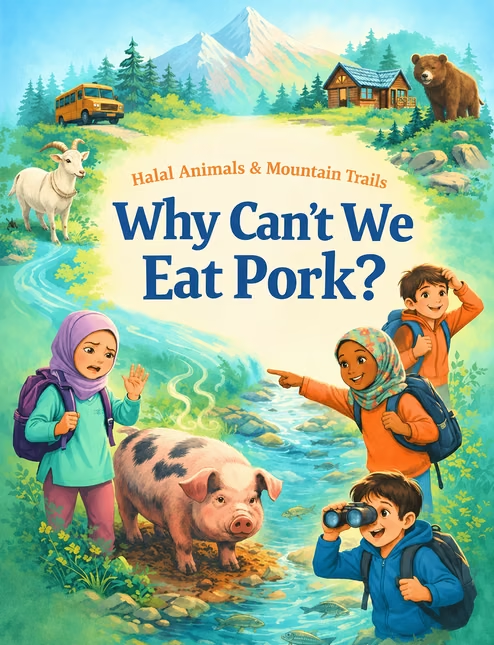
Q: Why can’t we eat everything?
A: Surat Al Maidah 5:5 ‘All good, pure foods have been made lawful for you’ "الْيَوْمَ أُحِلَّ لَكُمُ الطَّيِّبَاتُ"
Q: Why do we say 'Bismillah' before eating?
A: Saying 'Bismillah' reminds us to thank Allah for the food we have and to eat in a way that’s mindful and blessed.
Q: Why are pigs considered dirty animals?
A: Because they eat decaying matter, garbage, and dead animals, which helps clean the environment (decomposer)—but makes them unsafe to eat.
Frequently Asked Questions
Is camel meat available in halal markets?
Yes, camel meat is widely available in halal markets across Middle Eastern, North African, and South Asian communities. It is a traditional and preferred meat in these regions.
Can I hunt wild camels for halal meat?
Yes, wild camel hunting is permitted when done properly with Bismillah, fatal wound, and swift death. However, wild camels are rare and hunting is regulated in many countries.
How should camel be slaughtered according to Islamic law?
Camel must be slaughtered using Zabiha: sharp knife, swift cut to throat, Bismillah said before cutting, and complete bleeding allowed. Large animal slaughter should be done by trained personnel.
Is camel commonly eaten in Muslim countries?
Yes, camel is a traditional and beloved meat in Middle Eastern and North African Muslim cultures. It is considered a delicacy and is frequently served at celebrations and family gatherings.