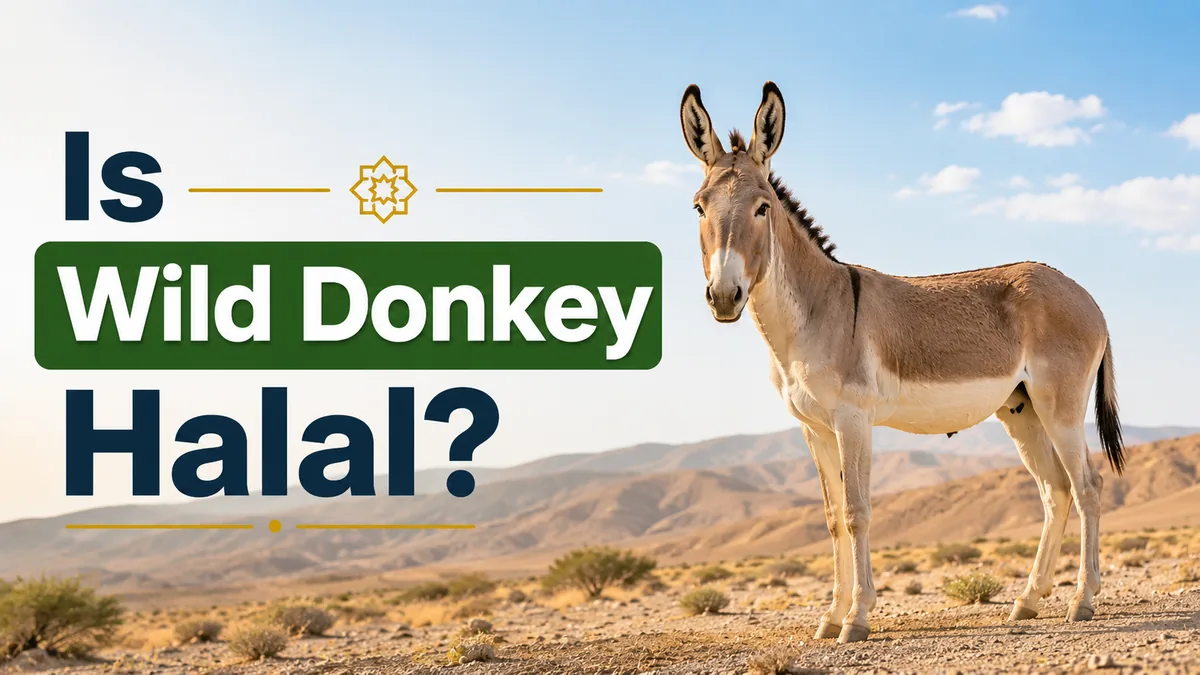
Is Wild Donkey Halal?
Wild donkey (onager) is haram (forbidden) in Islamic dietary law. Although wild donkeys are herbivorous animals native to arid regions, Islamic scholars have ruled that donkey meat—whether wild or domesticated—is forbidden. This prohibition applies to all members of the donkey species regardless of hunting method.
Understanding Wild Donkeys (Onagers)
Wild donkeys (onagers) are herbivorous animals that feed on grasses and desert vegetation. Although they are non-predatory prey animals, Islamic scholars explicitly prohibited eating donkey meat. This prohibition is based on hadith sources and Islamic jurisprudence.
Why Donkey Meat Is Forbidden
Although donkeys are herbivorous and non-predatory, Islamic scholars forbade eating donkey meat based on Prophetic traditions. Sahih Muslim 1941 documents that the Prophet prohibited eating donkey meat. Tirmidhi 1486 confirms this prohibition. Islamic jurisprudence explicitly excludes donkeys from halal animals.
Contrast with Horse
While donkey meat is forbidden, horse meat is permitted. This distinction is based on Prophetic guidance: the Prophet allowed horse meat but prohibited donkey meat. Islamic scholars confirm this distinction applies to both domesticated and wild species.
Simple Answer
- Is wild donkey halal? No. Donkey meat is haram, regardless of whether it is wild or domesticated.
- Even if hunted properly with Bismillah? No. The prohibition on donkey meat is absolute in Islamic law.
- Why is horse halal but donkey haram? Based on Prophetic traditions, the Prophet permitted horse but forbade donkey.
Related Comparison
Related posts for comparison: Horse (Halal), Why Horse Halal But Donkey Haram. See these articles for detailed explanation of this Islamic ruling.
Teaching Halal Animals to Children?
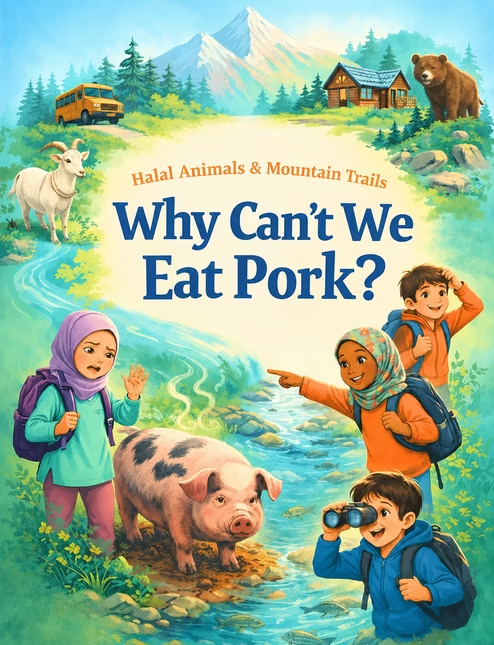
Our book Halal Animals & Mountain Trails introduces halal and haram animals in a child-friendly way with Islamic reminders.
Q: Why can’t we eat everything?
A: Surat Al Maidah 5:5 ‘All good, pure foods have been made lawful for you’ "الْيَوْمَ أُحِلَّ لَكُمُ الطَّيِّبَاتُ"
Q: Why do we say 'Bismillah' before eating?
A: Saying 'Bismillah' reminds us to thank Allah for the food we have and to eat in a way that’s mindful and blessed.
Q: Why are pigs considered dirty animals?
A: Because they eat decaying matter, garbage, and dead animals, which helps clean the environment (decomposer)—but makes them unsafe to eat.
Frequently Asked Questions
Is wild donkey meat ever permissible?
No. Wild donkey (onager) meat is absolutely forbidden in Islamic law. The prohibition applies to all donkey species regardless of whether they are wild or domesticated.
What if a wild donkey is hunted with proper Bismillah?
Even with proper hunting technique and Bismillah, donkey meat remains haram. The prohibition is absolute and based on Prophetic traditions, not hunting method.
Why is wild donkey haram when it is herbivorous?
Islamic scholars prohibited donkey based on explicit hadith from the Prophet Muhammad, not based on biological characteristics. The Prophetic prohibition is sufficient for Islamic law.
Is the prohibition the same for horse and donkey?
No. Horse is halal while donkey is haram. This distinction comes directly from the Prophet's guidance and is confirmed by all Islamic schools.