
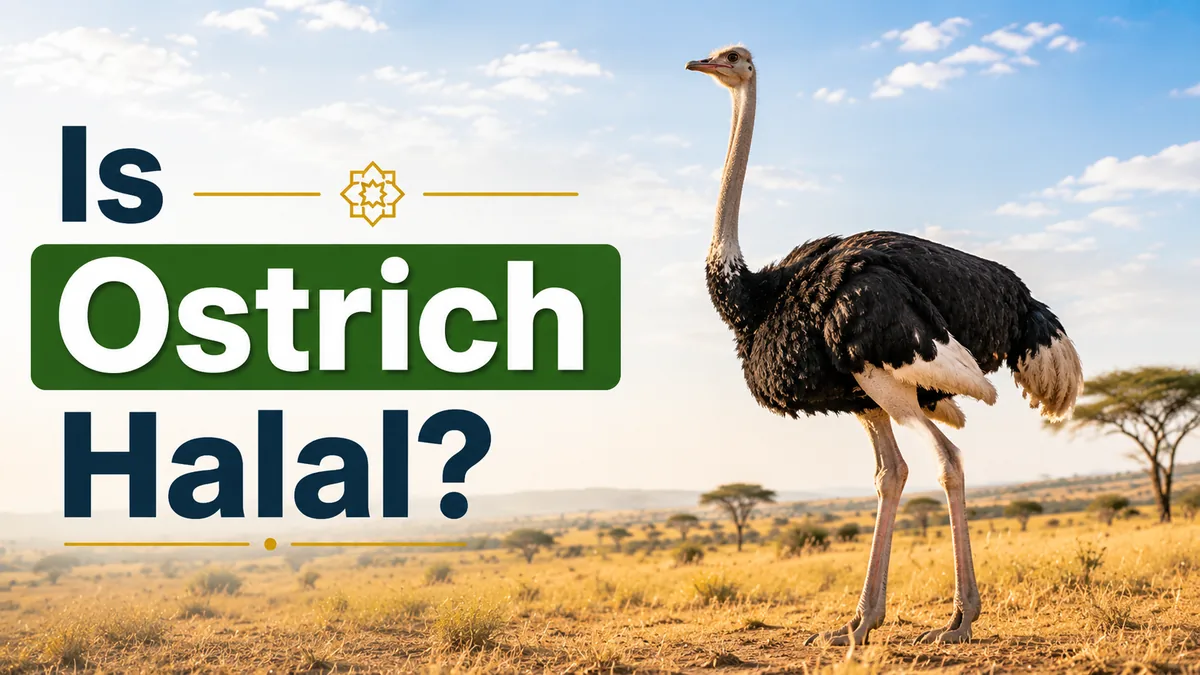
Is Ostrich Halal?
Yes, ostrich is halal. Ostriches are large flightless birds classified as halal animals in Islamic law. They are non-predatory birds, classified as permissible in Islamic law. The critical question is: was the ostrich hunted or slaughtered using proper Islamic methods?
Understanding Ostrich
Ostriches are large flightless birds native to Africa. They are primarily herbivorous, feeding on plants and seeds. Ostrich farming is an established industry.
If the Ostrich Is Hunted
If someone hunted a ostrich, the meat is halal only if three conditions are met:
- Bismillah was said before the hunt. The hunter must say “Bismillah” before releasing the hunting weapon.
- The wound was fatal. The weapon must cause death from the hunting wound itself.
- The ostrich died quickly. Swift death is ideal.
Allah says: “Eat of that upon which the name of Allah has been mentioned” (Qur’an 5:4)
Qur’an 22:34 establishes that proper slaughter of animals is a sacred practice. Sahih Muslim 1955 emphasizes that intention and invocation determine permissibility.
If the Ostrich Is Captured Alive
If captured alive, it must be slaughtered using Zabiha: sharp knife, swift cut to throat, Bismillah said before cutting, complete bleeding allowed.
If Found Dead
If you find a dead ostrich, the meat is not halal. “Forbidden to you are dead animals…” (Qur’an 5:3)
If Source Is Unknown
If ostrich meat comes from an unknown source, it should not be treated as halal. For Muslim families: purchase from halal-certified suppliers, ask your imam, or look for halal certification.
Related Halal Animals
ostrich follows the same halal rules as emu and turkey. All share identical halal hunting and slaughter requirements.
Simple Answer
- Is ostrich halal? Yes. ostrich are non-predatory, permissible in Islam.
- Is the meat halal? Only if hunted with Bismillah or slaughtered using Zabiha.
- From unknown source? No, unless you verify proper Islamic slaughter or hunting.
Teaching Children?
Our book Halal Animals & Mountain Trails introduces halal animals in a child-friendly way.
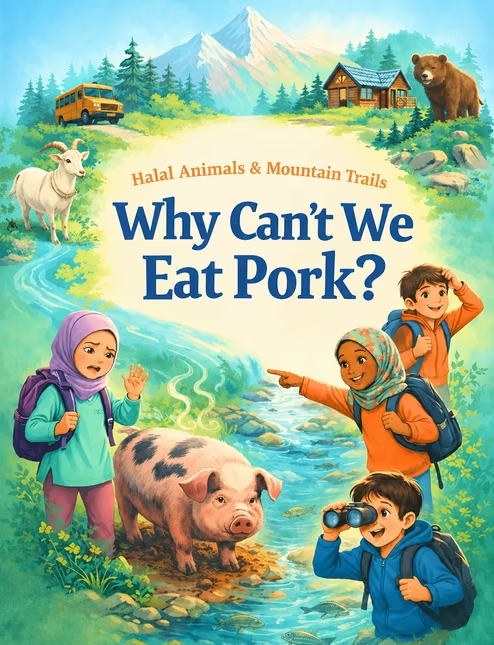
Q: Why can’t we eat everything?
A: Surat Al Maidah 5:5 ‘All good, pure foods have been made lawful for you’ "الْيَوْمَ أُحِلَّ لَكُمُ الطَّيِّبَاتُ"
Q: Why do we say 'Bismillah' before eating?
A: Saying 'Bismillah' reminds us to thank Allah for the food we have and to eat in a way that’s mindful and blessed.
Q: Why are pigs considered dirty animals?
A: Because they eat decaying matter, garbage, and dead animals, which helps clean the environment (decomposer)—but makes them unsafe to eat.
Frequently Asked Questions
Is ostrich meat available in halal markets?
Yes, ostrich meat is increasingly available in specialty halal butchers and online halal suppliers. Ostrich farming is an established industry in South Africa, Australia, and some Middle Eastern countries. Look for certified halal suppliers that specifically raise and slaughter ostriches according to Islamic standards.
Can I hunt wild ostriches for halal meat?
Wild ostriches are primarily found in Africa. If hunting a wild ostrich, the same halal hunting rules apply: you must say Bismillah before the shot, the wound must be fatal, and death must be swift. Hunting wild ostriches is rare in Muslim communities and requires local expertise and permits.
How should ostrich be slaughtered according to Islamic law?
Ostrich must be slaughtered using the Zabiha method: a sharp knife must make a swift, single cut to the throat severing the blood vessels and windpipe. Bismillah must be invoked immediately before the cut. The ostrich must be allowed to bleed completely. Large birds may require professional slaughterers at halal-certified facilities.
Is ostrich meat commonly eaten in Muslim countries?
Ostrich meat is not widely traditional in Muslim cuisine but has become popular in recent decades due to ostrich farming. It is lean, red meat similar to beef and is increasingly recognized as a halal alternative to conventional poultry. Ostrich is particularly popular in South Africa and Australia among Muslim communities.